Admin Dashboard
A bespoke backend management system to help car dealerships manage their stock & finances.
Timeline
July 2024 - May 2025
Role
Sole Designer & Developer
Clients
Heel & Toe Cars Ltd
Marco's Polos Ltd
Project Overview
This project began when Marco’s Polos wanted some help managing their day-to-day operations. Initially, I was tasked with designing a printable inspection sheet for mechanics to fill out for each car. But when I visited their workshop and found them searching through a pile of paperwork, I knew there had to be a better way. Over the following weeks, the concept of storing inspection sheets online grew into a comprehensive backend dashboard that ticked all the boxes.
More recently, Heel & Toe Cars approached me looking for a very similar solution, so I modified the original Polo specific design to cater for their needs. This application is now used daily by both clients and has become essential to running their businesses.
What It Does
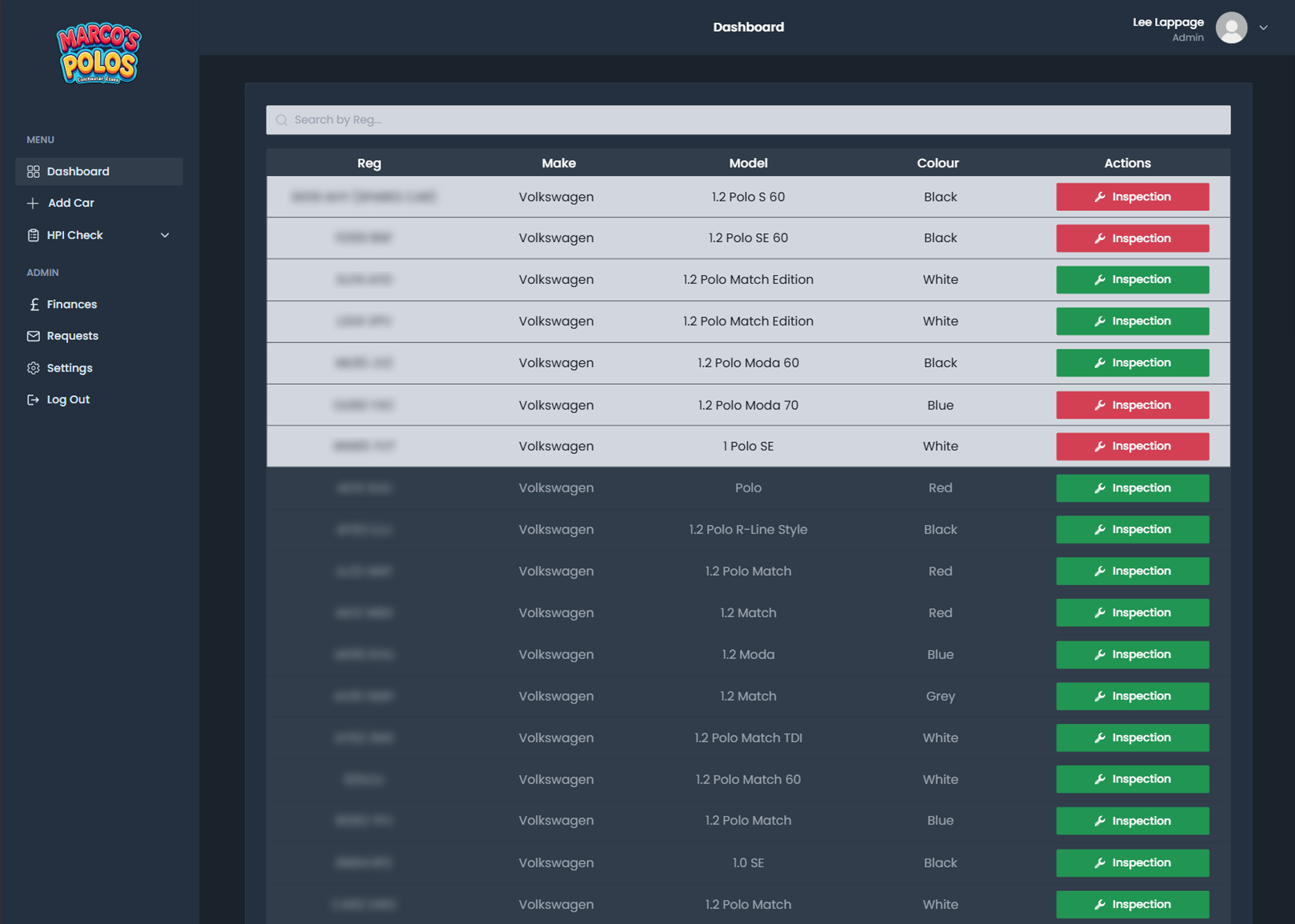
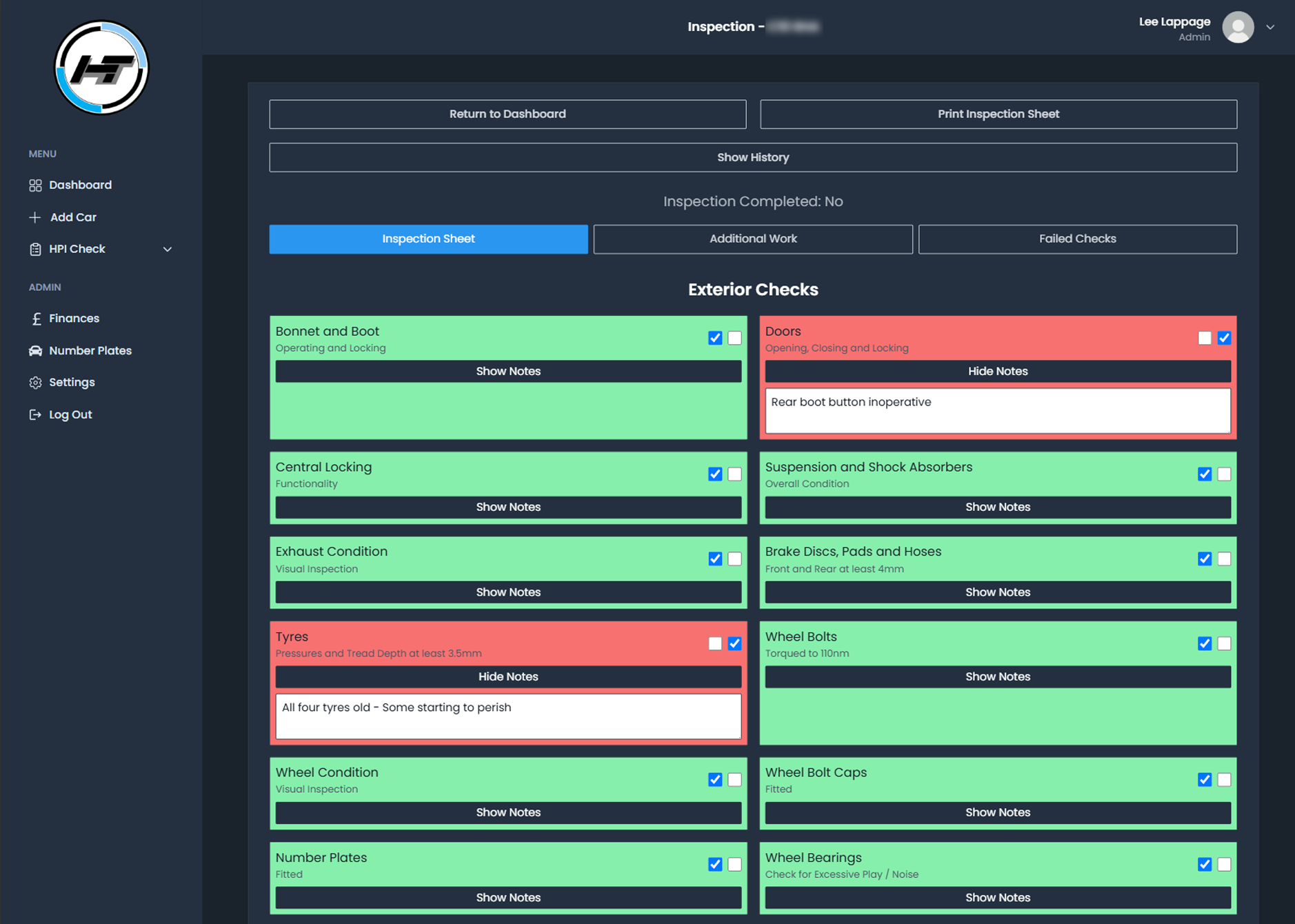
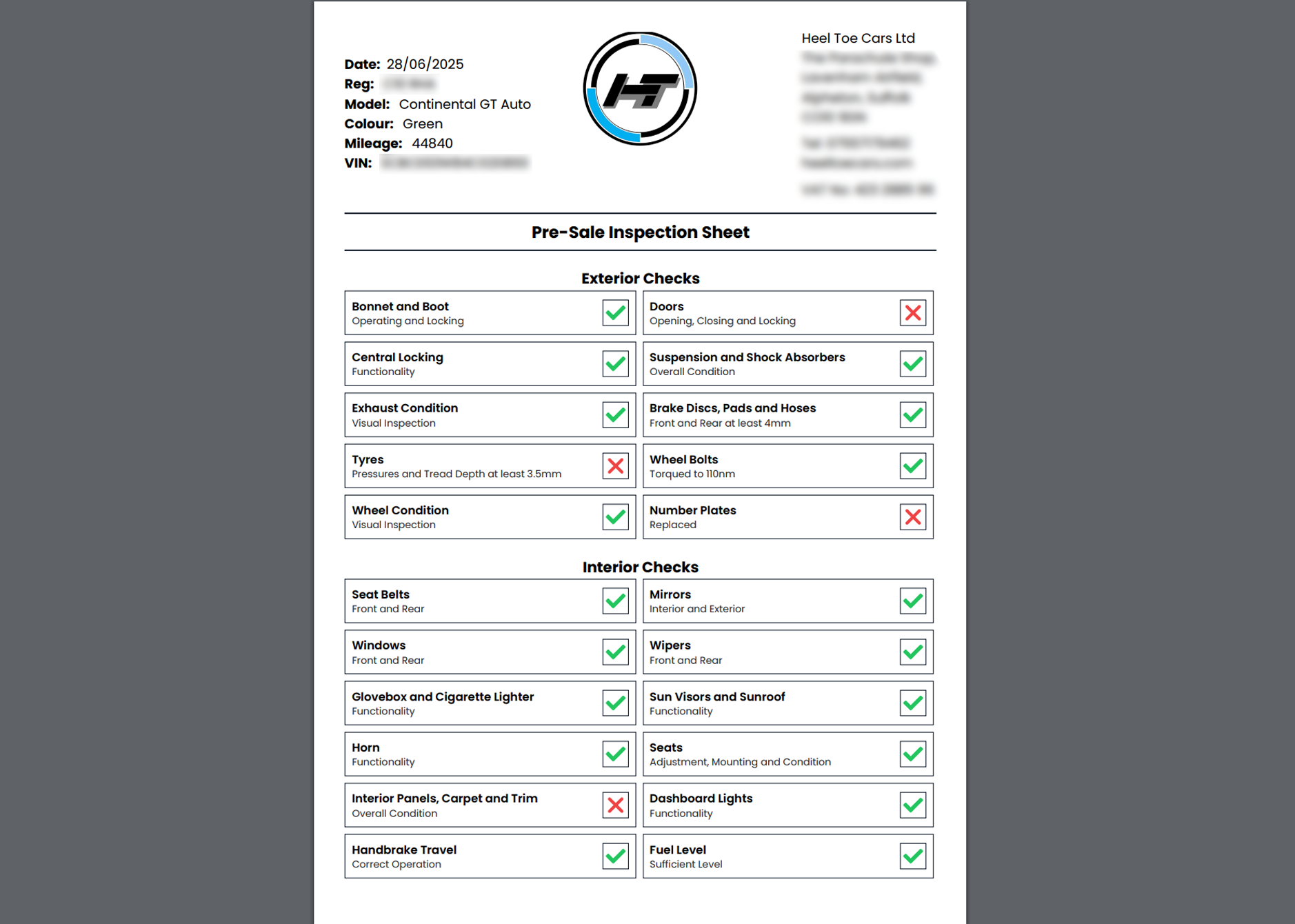
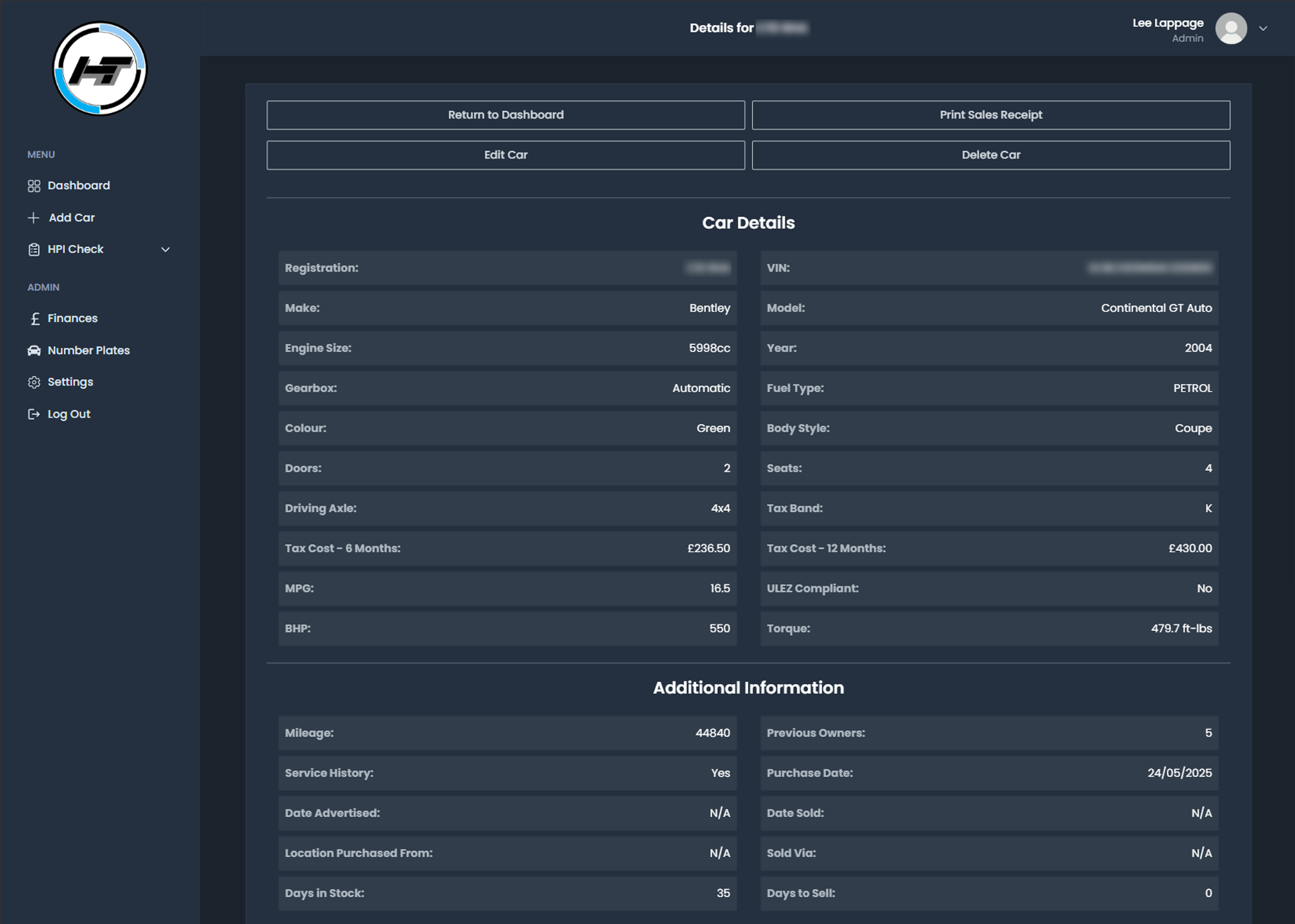
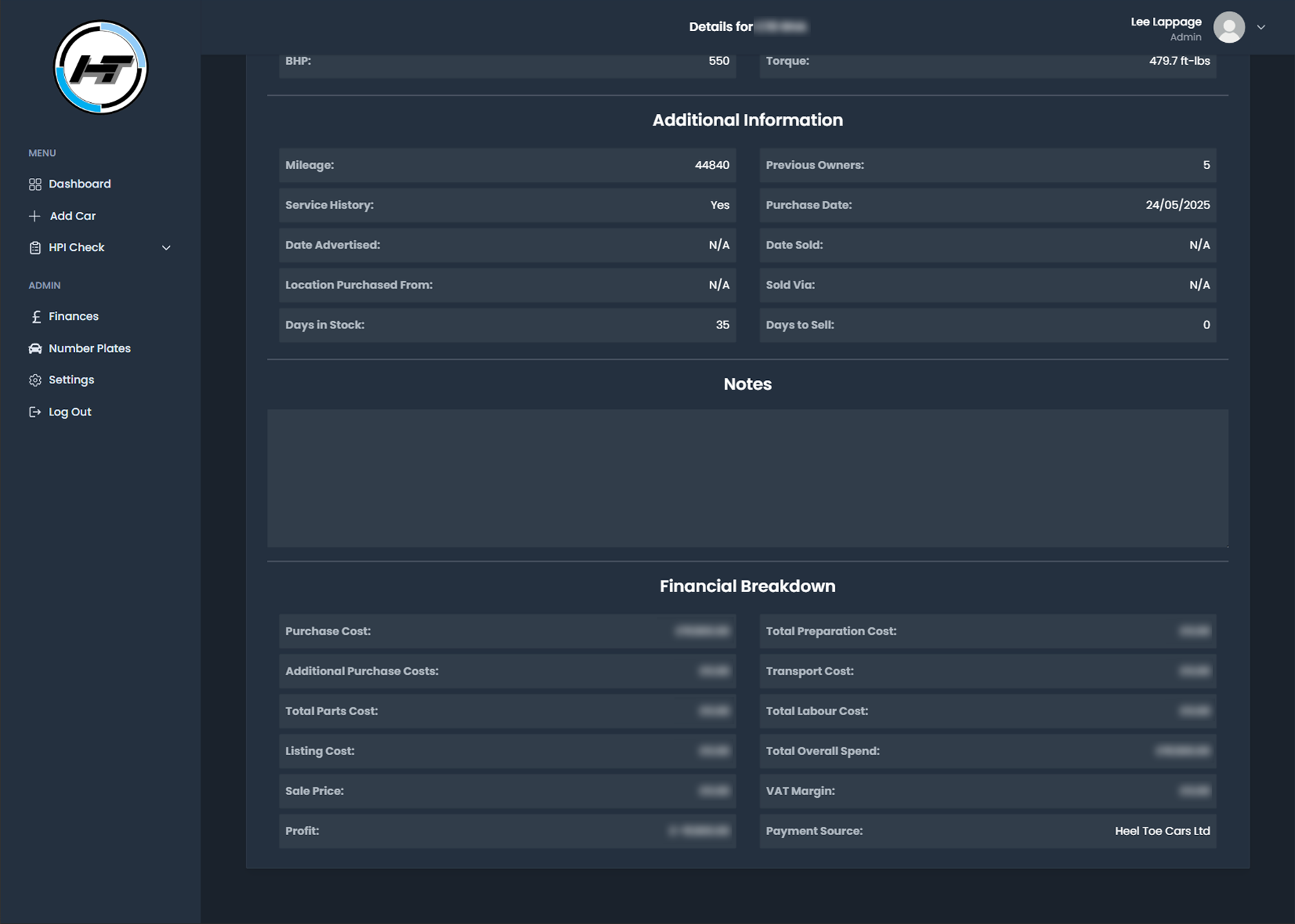
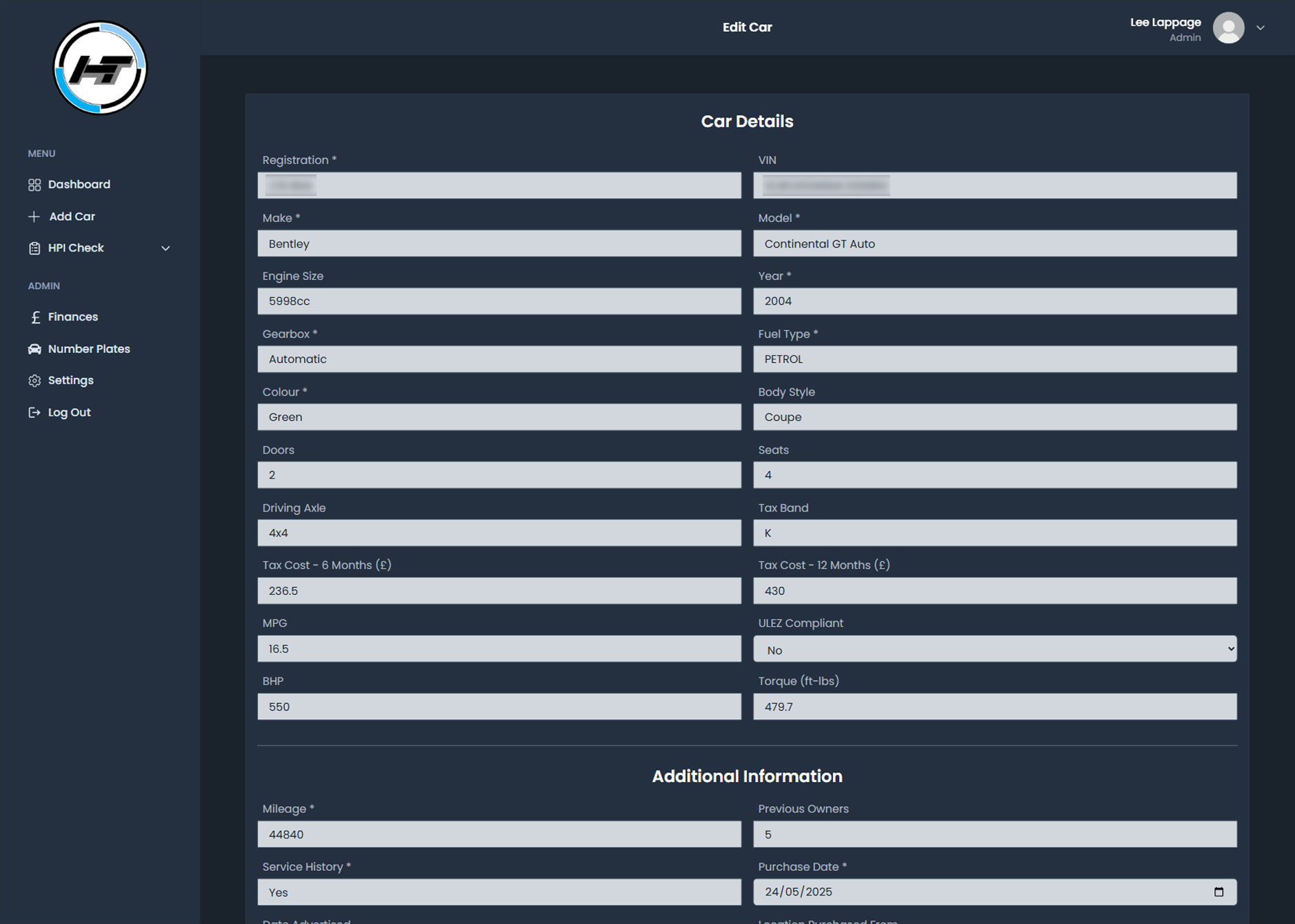
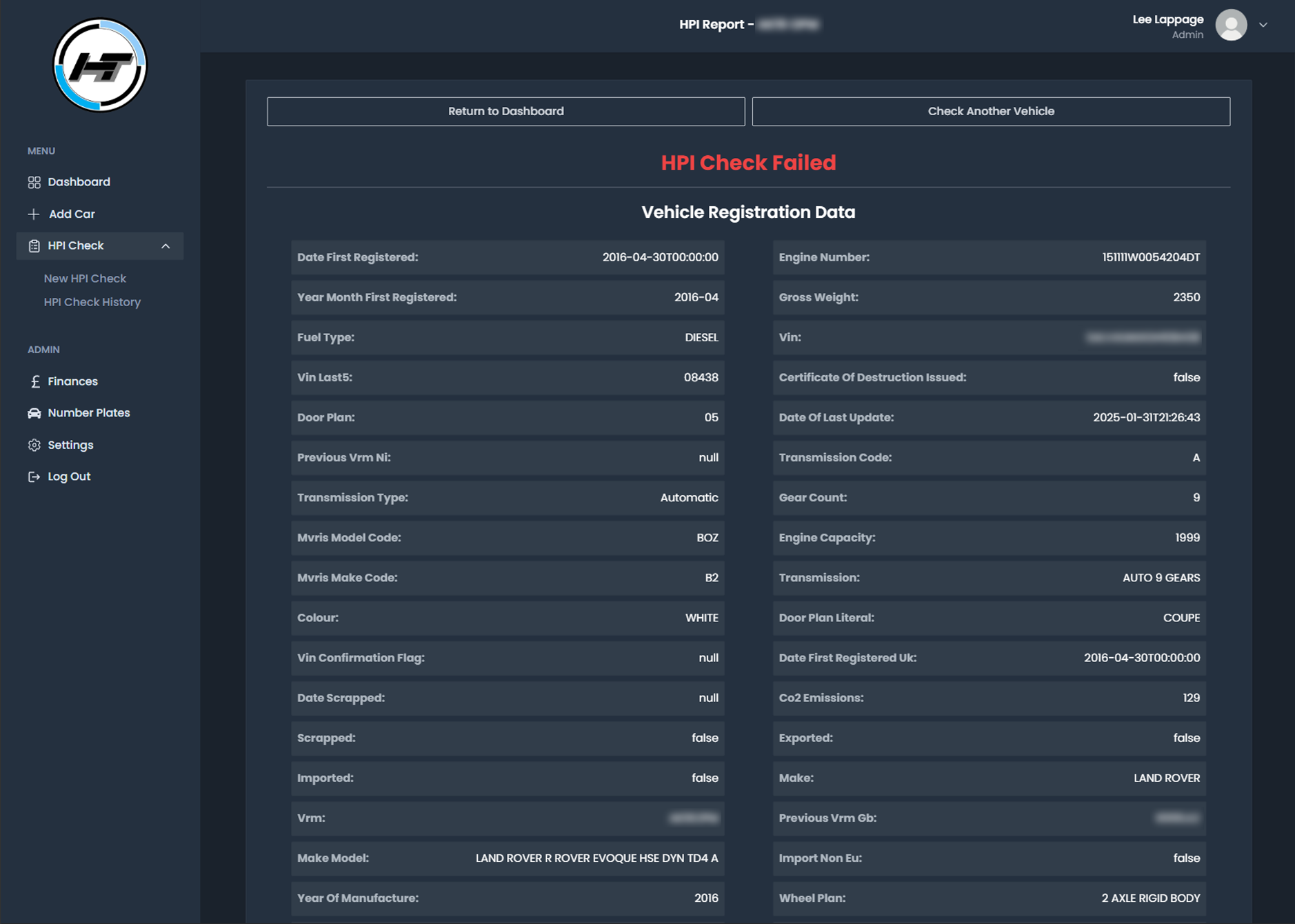
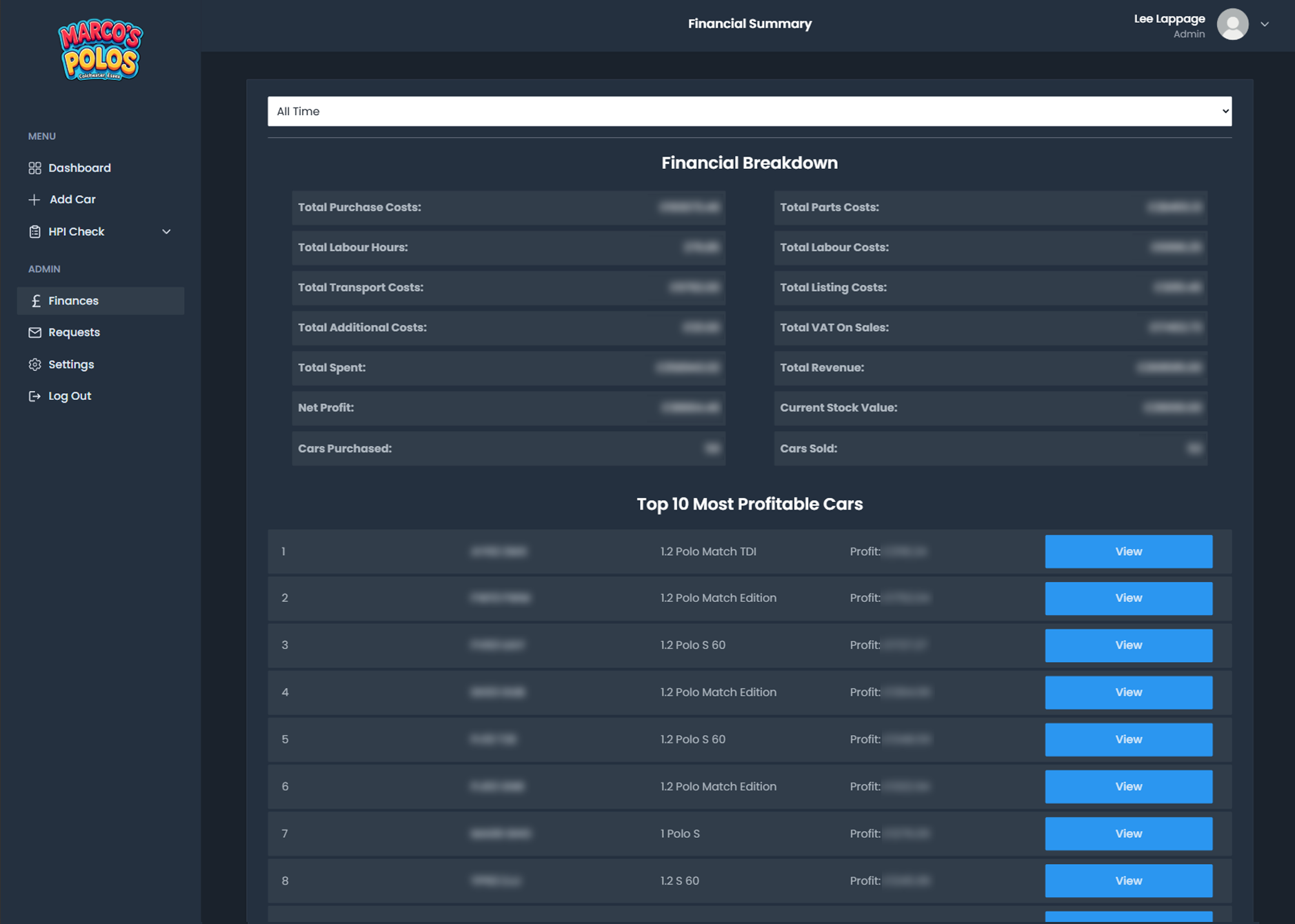
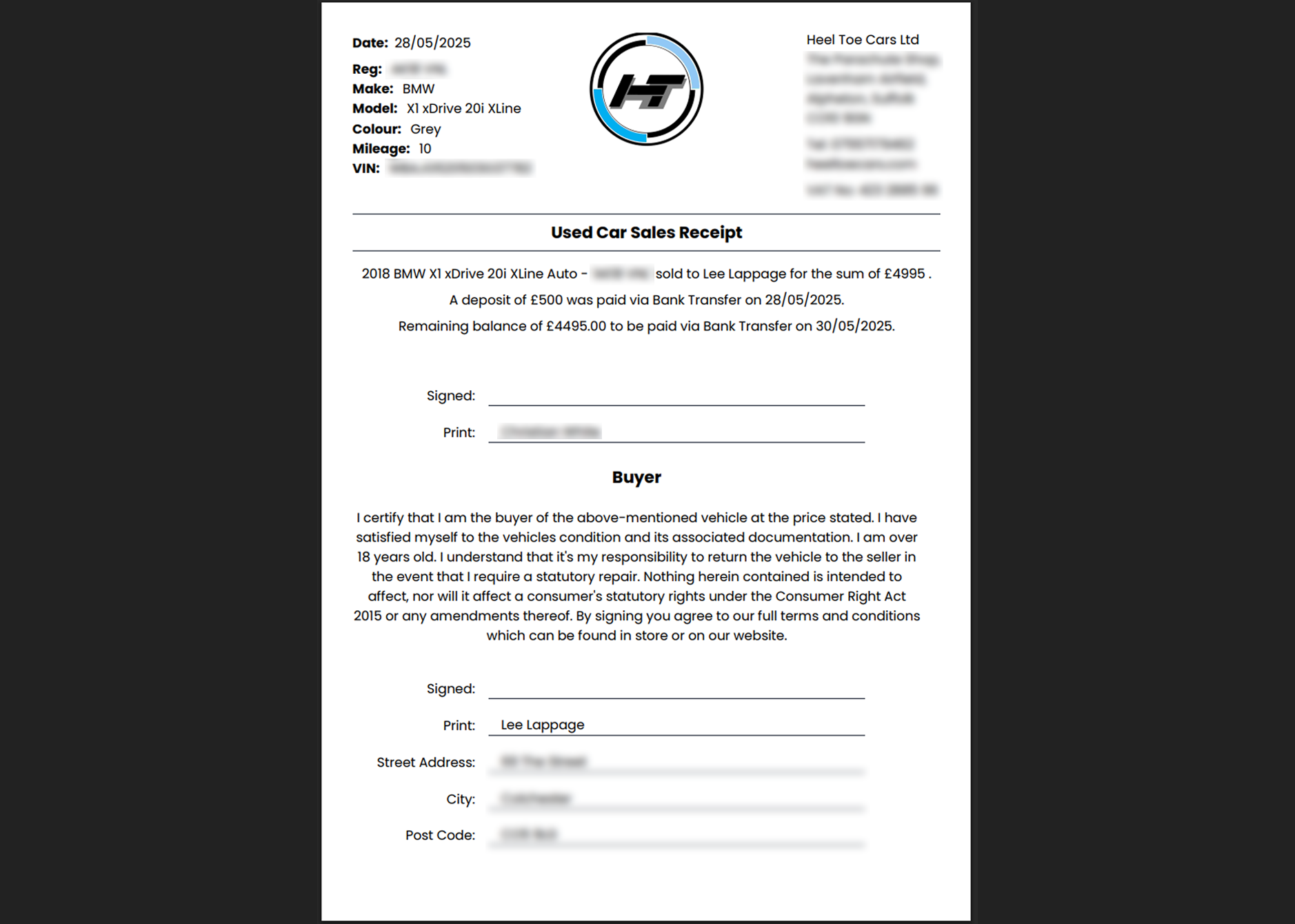
The admin dashboard gives car dealerships a single interface to manage every aspect of their business. Cars can be added by entering the registration and mileage - vehicle details and a live valuation are then fetched automatically and added to the dashboard. Interactive inspection sheets allow mechanics to carry out inspections on a phone or tablet, these are then synced in real time alongside a detailed activity log which records who has carried out what work and when, giving managers full visibility and control over their staff. Pre-sale inspection sheets and fully customisable sales receipts are generated dynamically in a single click. HPI Checks can be performed for just £1.80 per search, with results being stored permanently. A powerful finances page breaks down purchase, parts, labor, transport and listing costs (with VAT margin calculations), tracking revenue, current stock value and net profit, displaying the top 10 most profitable and fastest-selling cars over any custom date range.
The application has two user roles: 'Admin' and 'Staff'. Admin users have full dashboard access - allowing them to add, edit and delete vehicles, run HPI checks, generate sales receipts and view all financial reports and analytics. Staff users can only add vehicles and complete inspection sheets, they cannot edit or delete vehicles, perform HPI lookups, generate receipts or have any access to financial data.
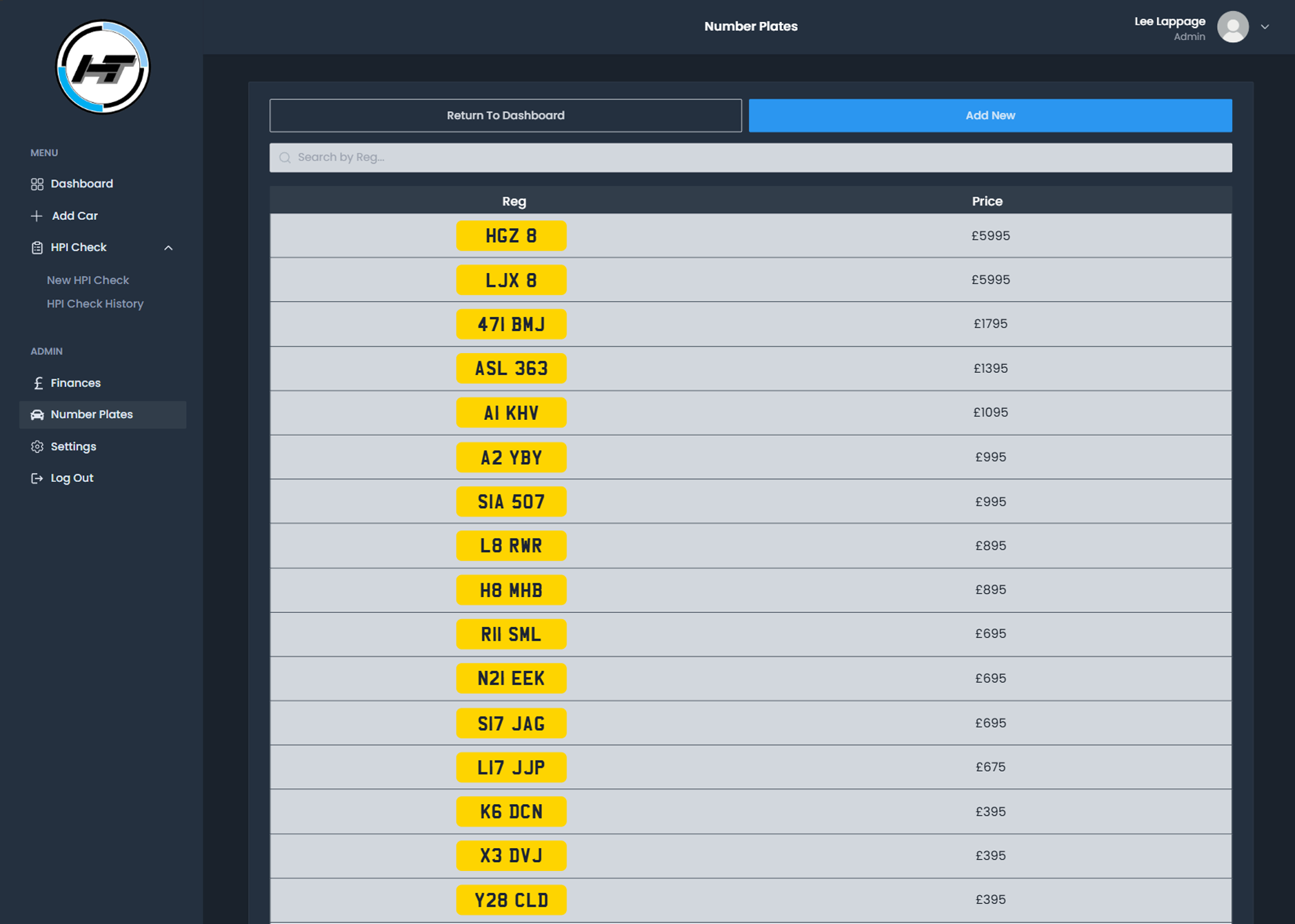
The dashboard also allows Heel & Toe Cars Ltd to easily manage what private registration plates are for sale on their website, meaning they can add, remove or update pricing at any time. Marco's Polos wanted all of their 'Marco's Matchmaker' requests to be displayed and easily manageable on the dashboard, displaying customer contact details and keeping track of who has already been contacted.
Technical Implementation
For this project, I created a React application written in Javascript. I utilised Tailwind CSS for styling to create a modern, responsive layout.
When you add a car to the dashboard or perform an HPI check, it uses the Car Check Details API to search a database with more than 40 million vehicle records in.
All vehicle and financial data is stored in a Firestore Database, with authentication being handled by Firebase Authentication.
As React is purely client-side rendered, I made use of Cloudflare Workers to create server-side proxy endpoints for all of my third-party API calls, securely managing access tokens, handling CORS preflight requests, and relaying JSON responses. This ensures that all API calls are performant and prevents any API keys being exposed to the client.


